Why Version Control Exists ?
Remember When Sharing Code Was a Total Mess?
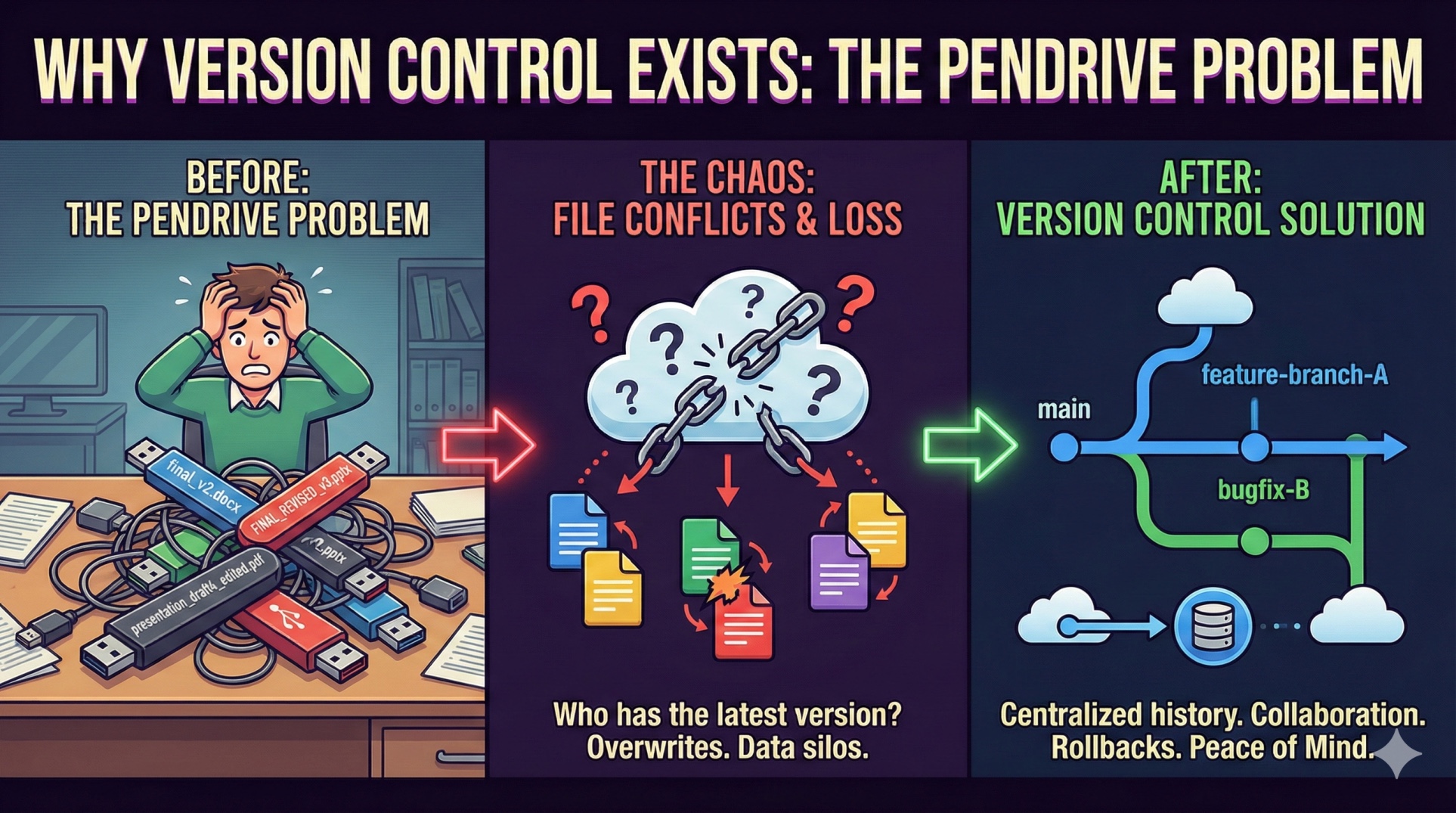
There was a time when developers didn't have fancy tools like Git or GitHub. When we wanted to share code with our teammates, we used pendrives. Yes, those little USB sticks. We also sent files through email and created folders with crazy names like "final", "final_v2", "new_final", and "final_FINAL_please_use_this_one".
I'm not making this up. Ask anyone who started coding before 2010. They'll tell you the same story, probably with a tired smile.
How We Shared Code Back Then
Picture this. You're building a website with your friends. Maybe it's a college project or a small job you took up together. Everyone's working on different parts.
You're making the homepage. Your friend is building the contact page. Another person is working on the photo gallery. Sounds simple enough, right?
Two weeks later, you finish your part. You copy all your files onto a pendrive, walk to your friend's desk, and hand it over. They plug it in, copy everything to their computer, and start adding their work.
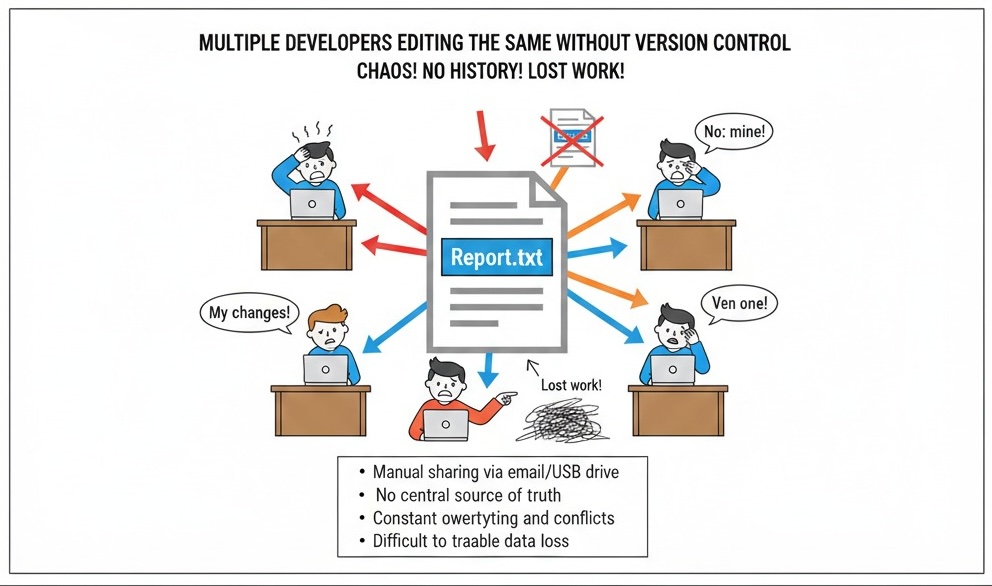
But here's the problem. They changed some styling yesterday. You also changed the same styling file today. Now which version should you keep? You both sit there for half an hour, opening both files side by side, trying to figure out what's different.
Now imagine doing this with five people, working for a month, making changes every single day. It becomes crazy messy. Everyone has their own folder, their own "version" of the project. Nobody really knows which one is correct.
The Email Drama
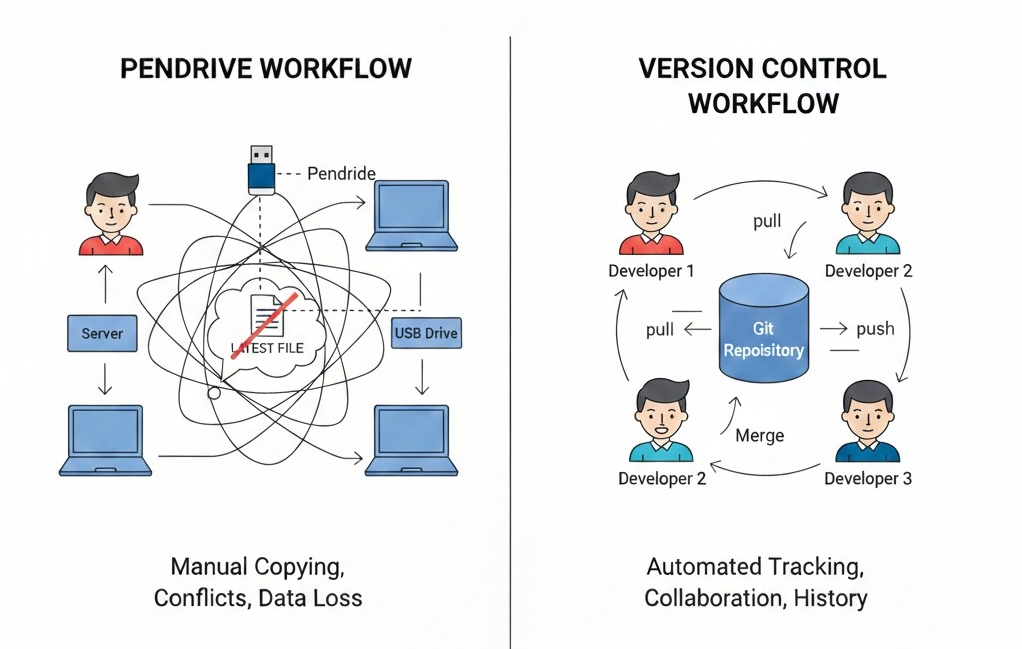
Sometimes we couldn't meet in person, so we emailed files instead. Someone would zip up all the project files, attach them to an email saying "here's the latest code", and send it to everyone.
Next morning, you check your email. You see three different messages. "Updated code v2", "New files attached", and "Final version ignore my last email". Which one do you download? Nobody really knows. So you download all three, just to be safe. Then you waste time figuring out what actually changed between them.
The worst part? If someone made changes but forgot to send them back to the team, those changes were just gone. No way to get them back unless that person still had the files saved somewhere.
When Things Went Wrong
The real problems happened when mistakes were made. And trust me, mistakes happened all the time.
Someone accidentally deletes an important file. Can you get it back? Maybe, if someone made a backup. But often there was no backup. Or the backup was from weeks ago and missing all the recent work.
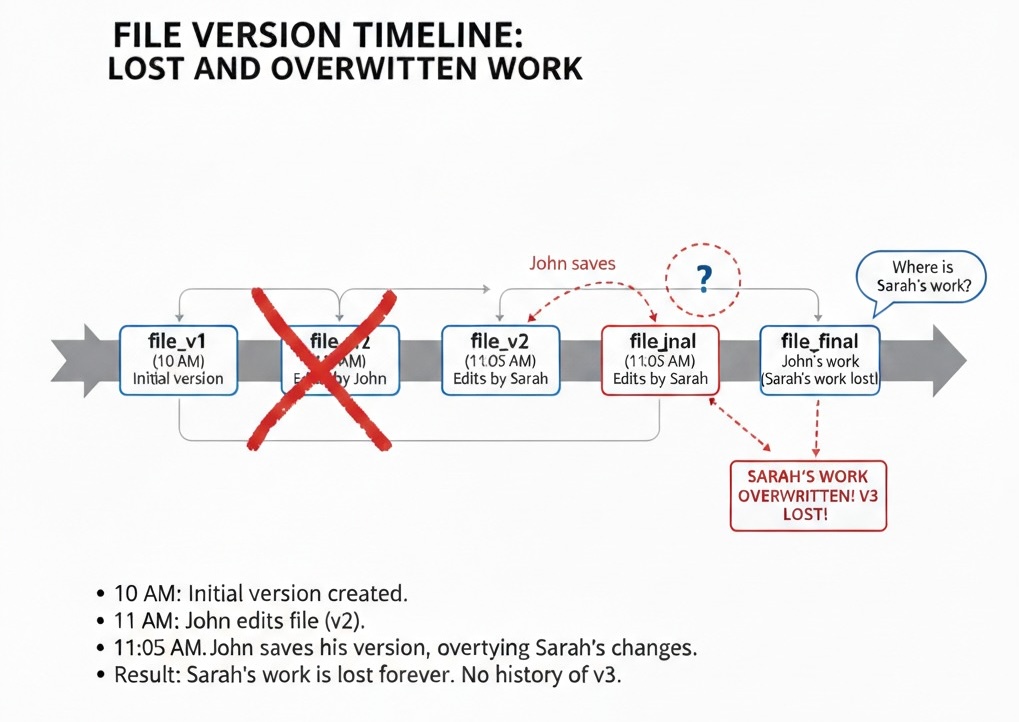
Two people work on the same file at the same time. One person adds a new button. Another person fixes a loading bug. Both save their versions. Now you have two different files. Someone has to sit down and manually combine them, reading every single line carefully, making sure nothing gets lost.
I've seen teams lose entire features because someone saved over the wrong file. I've seen people work all night trying to recreate code they wrote days ago because the newest version somehow disappeared.
It wasn't just annoying. It was scary. One simple mistake could erase hours or days of work.
Working Together Was Hard
Let's talk about what happened when people tried to work at the same time.
Say you're working on the login page. Your teammate is working on the user dashboard. Both of you need to change the same database file. With the old pendrive system, only one person could safely work on it.
So what did people do? They waited for each other. "Hey, are you done with that database file? I need it next." You'd just sit there, maybe work on something else, constantly asking if the file was free.
Some teams tried to be smart. They'd work completely separately and plan to combine everything at the end. But when that day came, combining was a nightmare. Files clashed everywhere. The same code appeared twice in different places. Nothing worked properly. Sometimes fixing these problems took longer than writing the code in the first place.
Everything Depended on People Being Perfect
The whole system only worked if everyone was super careful and communicated perfectly. You had to trust that everyone was working on the correct version. You had to trust that people would tell you about their changes. You had to trust that nobody would accidentally delete the shared files.
But people aren't perfect. We forget things. We don't always communicate clearly. We make mistakes. When your whole way of working depends on everyone being flawless, problems are guaranteed.
Why Version Control Changed Everything
After years of struggling, developers said "we need something better". Version control systems became something every developer had to use. Not optional. Essential.
Think about what tools like Git give you today. Every single change gets saved automatically. Not just what changed, but who changed it, when, and why. You can see the complete history of your project, right from day one.
Multiple people can work on the same file at the same time. The tool figures out how to combine the changes. When it can't figure it out, it shows you exactly where the problem is so you can fix it yourself.
You can try new ideas without fear. Want to test something risky? Make a separate copy, experiment freely, and if it doesn't work, just throw it away. Your main code stays safe and untouched.
And most importantly, you can never truly lose your work. Everything is saved, everything is tracked, everything can be brought back.
What We Learned
Looking back now, those messy days taught us something important. Writing code is only part of the job. You also need good systems that help teams work together smoothly.
The pendrive days showed us exactly what goes wrong when you don't have proper version control. The lost work, the confused versions, the panicked emails asking "does anyone have the file from yesterday that actually worked?"
Today, even people coding alone use version control. Because once you've tried it, going back feels impossible. Like trying to write a book using only random pieces of paper and hoping you don't lose any.
Those folders with names like "final_v2_updated_NEW_use_this_one"? They don't exist anymore. They're memories from a time when sharing work meant walking across the room with a USB stick in your hand.
And honestly? Nobody misses those days. Not even a little bit.
The chaos taught us a lesson. The tools we use matter just as much as the code we write. And we're never going back.